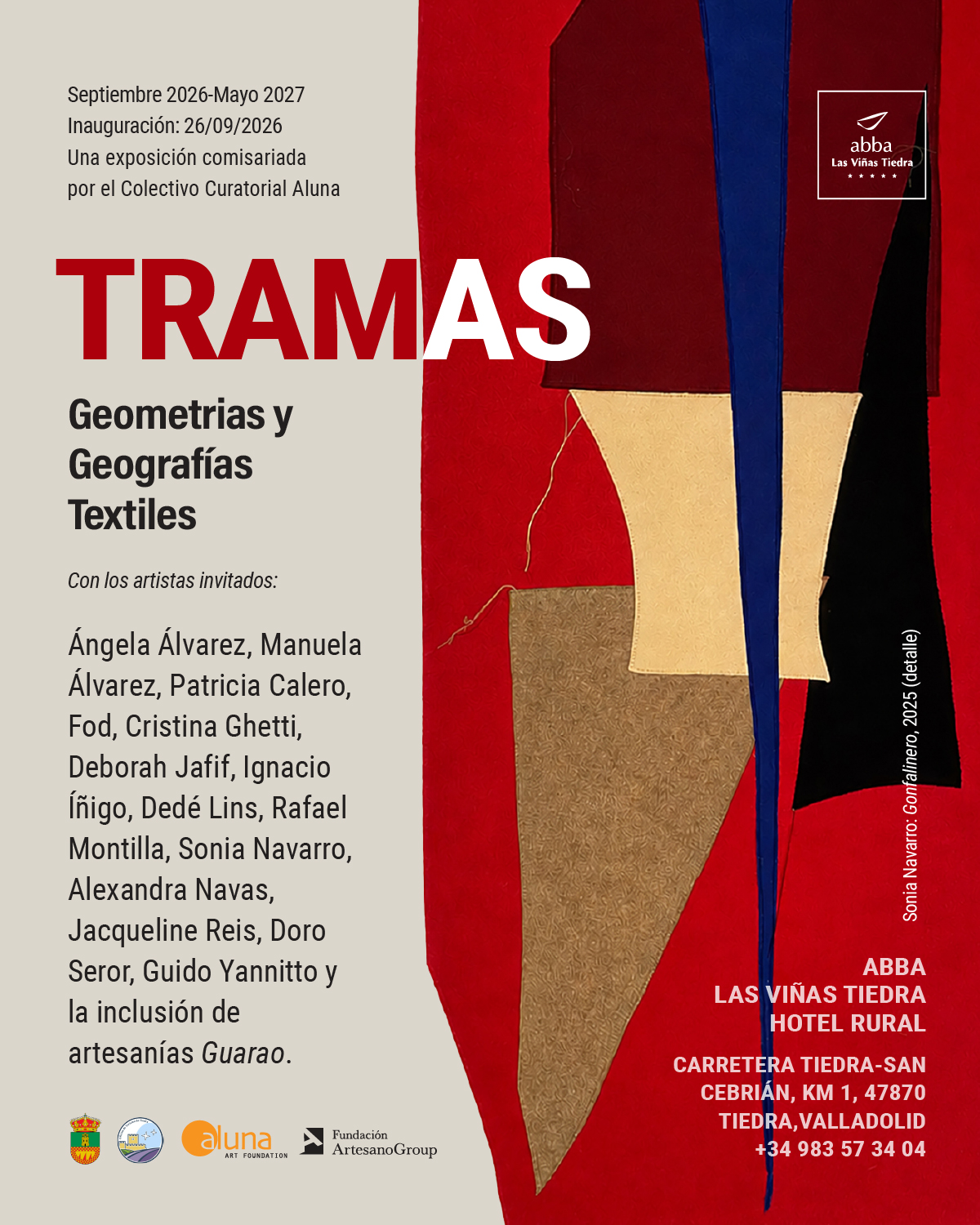
abba Las Viñas Tiedra Rural Hotel is hosting “Tramas: Textile Geometries and Geographies,” an exhibition curated by the Aluna Collective that brings together works by artists from Spain, Germany, and various countries in the Americas, exploring textiles and their relationships with geometry, territory, and memory.
Geometry and geography share the same Greek root, gê, which means “earth.” The former refers to its measurement, and the latter to its representation. Added to these is the concept of “textile,” derived from the Latin texere, meaning “to weave” or “to construct by joining elements together.” These three terms intertwine in this exhibition to explore how art can connect landscape, tradition, and the contemporary.
The exhibition was inspired by Tiedra and its surroundings, its landscapes, and the knowledge that has been passed down from generation to generation, but it also encompasses conceptual explorations of contemporary textiles. The region’s traditional textile techniques are presented in dialogue with the work of national and international artists who adopt a multidisciplinary approach, using diverse materials and drawing on the legacy of other regions.
Among the works on display is a collection by Zamora-based artist Ángela Álvarez, who keeps alive the region’s traditional techniques of high-warp and high-weft weaving. Since the late 1950s, this master textile artist has upheld this tradition and has experimented with natural dyes and textures created by combining different materials.
Also featured in the exhibition is Manuela Álvarez, from Tiedra, whose passion for embroidery and sewing is reflected in a three-dimensional geometric piece hand-sewn onto fabric, evoking a series of panels she ingeniously created years ago using the region’s traditional craft techniques to soundproof a community gathering space.
The connection between tradition and contemporary creation is evident in the work of Sonia Navarro, who transforms tasks traditionally associated with women’s work—such as sewing, creating patterns, and assembling garments—into a language of geometric abstraction. In *Gonfalinero 3*, the reference to an ancient garment linked to the banners carried by men also becomes a tribute to the act of sewing, which is almost always associated with women.
Argentine-born artist Cristina Ghetti presents a soft geometry through installations made of felt and folded, layered fabrics, incorporating references to cultural traditions as diverse as the ritual use of patterns in traditional Japanese textiles and Latin American Constructivism. In her Ninjas series, she reinterprets materials traditionally associated with the domestic and artisanal spheres, transporting them into the realm of geometric abstraction and alluding to the lineage of women who have contributed to the history of abstraction.
Some artists explore the boundaries between textiles and other disciplines. Patricia Calero uses industrial safety belts to create geometric compositions that draw on the tradition of Venezuelan kinetic art and origami. Ignacio Íñigo, for his part, exhibits three-dimensional pieces made solely with acrylic paint, so that they resemble folded or crumpled fabrics; yet, because they lack a support surface, they question the very nature of painting and its relationship to modes of representation.
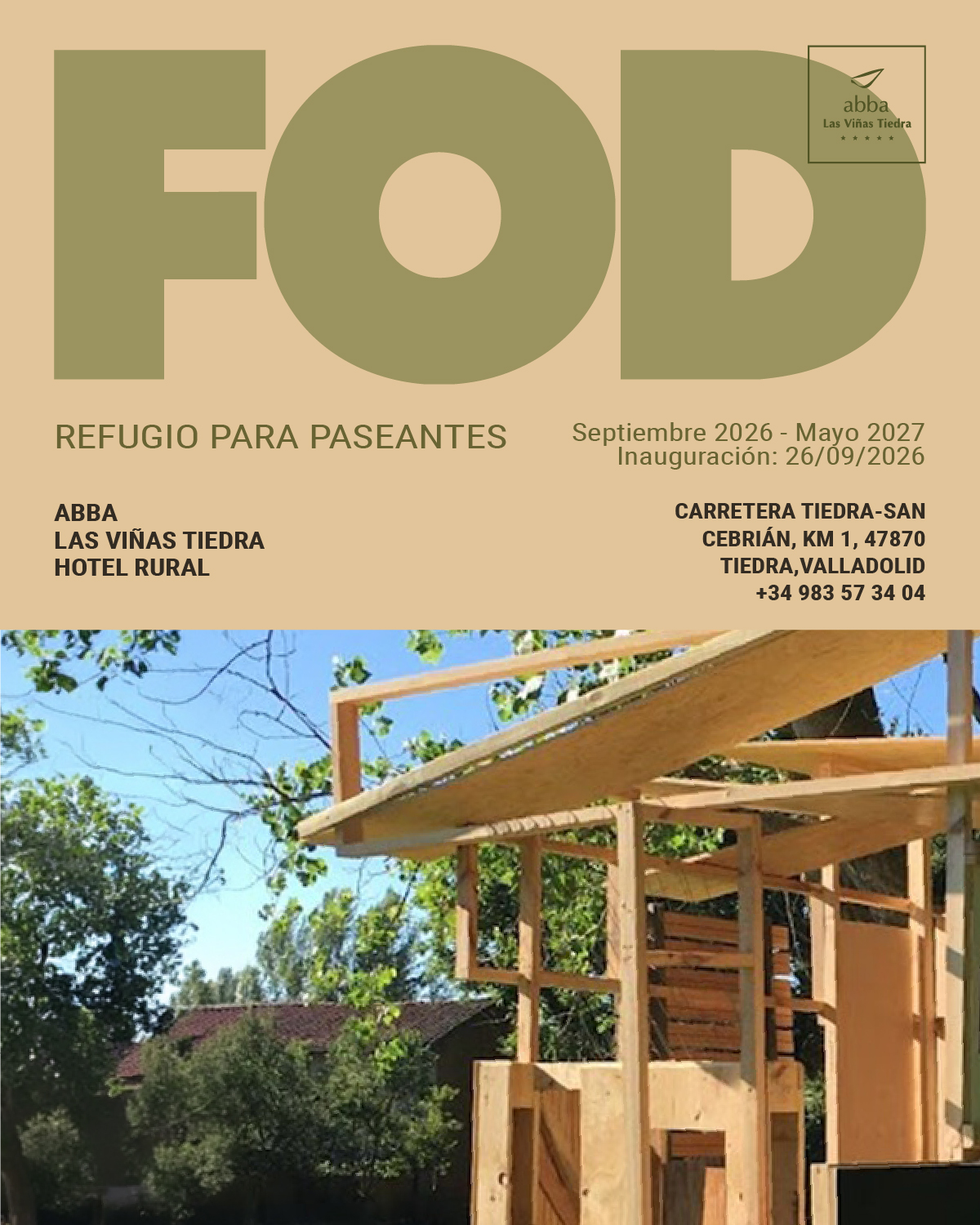
In the work of FOD (Francisco Olivares Díaz), a dialogue is established between painting and architecture. Lines, geometric shapes, tubes, and supports emerge from the pictorial plane to occupy the space. An untitled triptych on display, created as a tribute to the Italian architect Carlo Scarpa, incorporates the reverse side of the work as part of installations that alter the way we perceive art and architecture.
The Landscape of Tiedra as Inspiration
The landscape is another of the central themes in *Tramas*. The depiction of the landscape in the textiles shows us that there is always a way of seeing, understanding, and relating to our surroundings—a way shaped by culture. Rivers, mountains, paths, farmland, and organic forms are incorporated into distinct geometric patterns through the artistic language of the various participating artists.
Alexandra Navas, who is originally from Colombia, interprets the landscape of Tiedra through a handwoven piece created on a high-warp loom. The geometric shapes evoke the landscape and are combined with empty spaces that suggest movement and transformation.
For her part, Venezuelan artist Jacqueline Reis draws on family memories and her connection to various textile crafts. Expanding on her series *Memoria cromática*, she recreates her impressions of the Tiedra landscape through a color palette in which repetition and variation evoke the region’s atmosphere.
Brazilian artist Dedé Lins, who lives in Barcelona, draws inspiration from geometry and the relationship between art, design, and various crafts. For this exhibition, he has, for the first time, hand-sewn a composition of organic shapes constructed from cut leather. Rather than drawing literal inspiration from geography, he channels the energy of a landscape into the materials he uses.
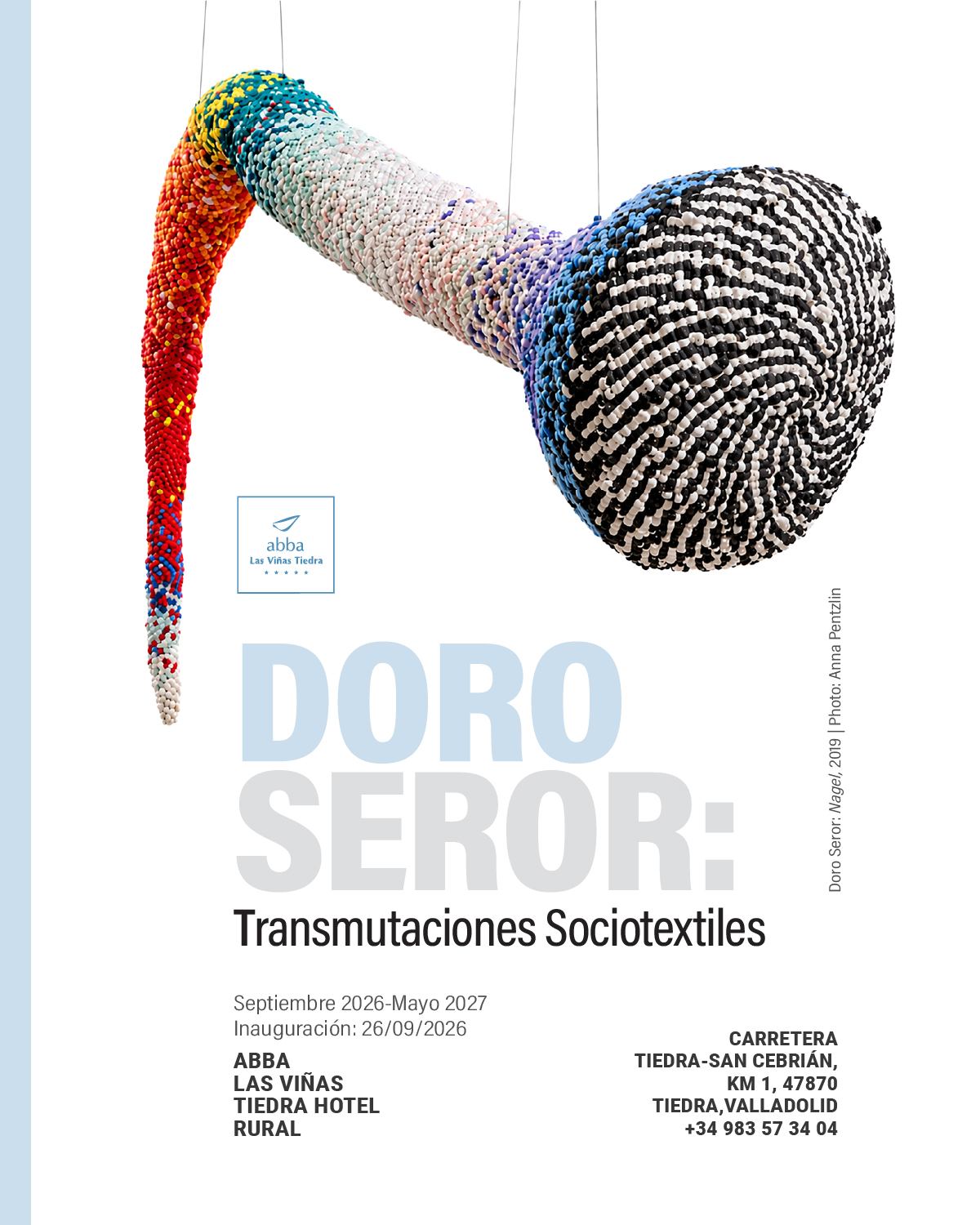
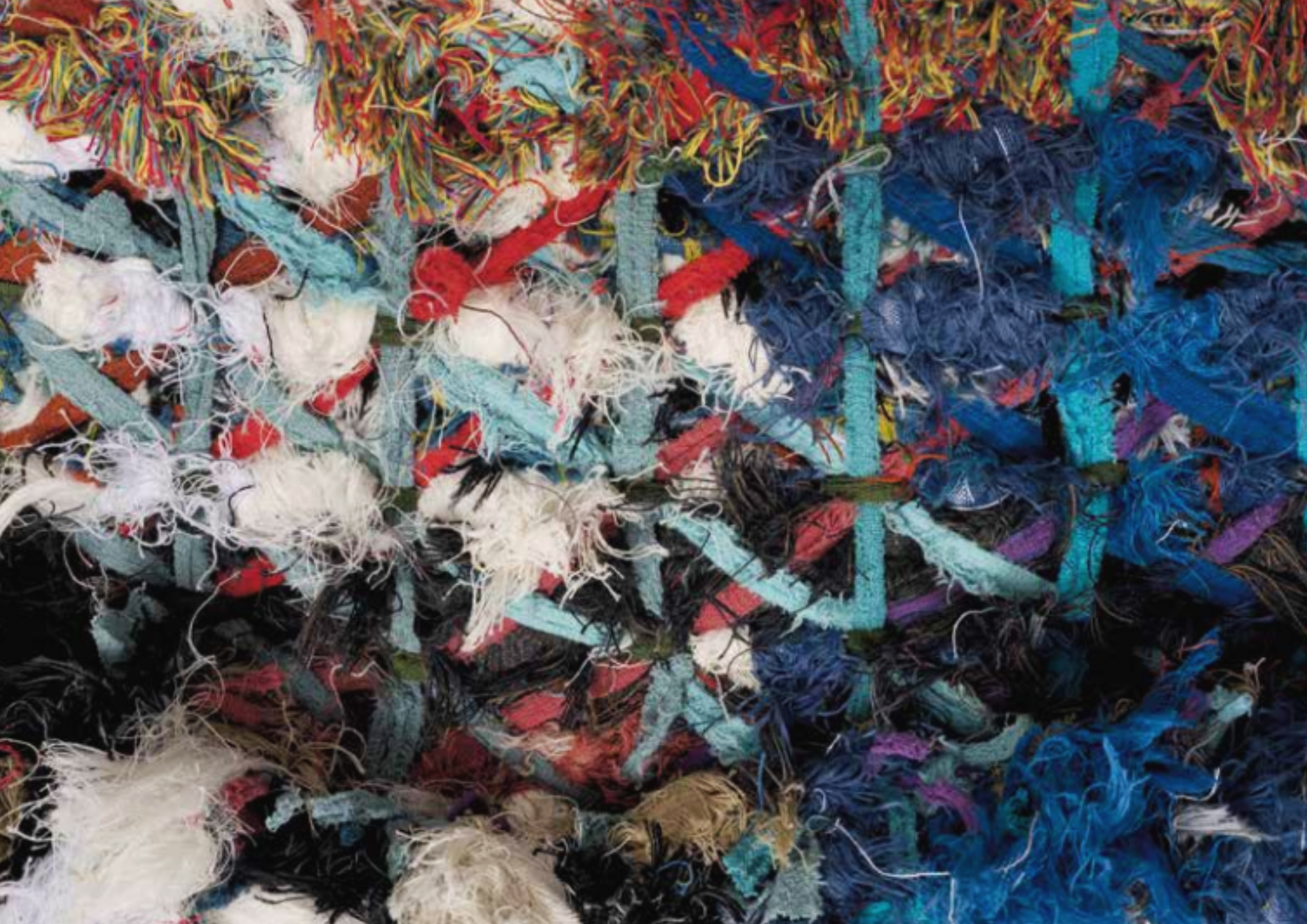
Taking a more abstract approach, Rafael Montilla works with a simple rope made of natural fibers that curves, intertwines, and knots together to create an organic structure. Each void depends on the limits of the material, turning the work into a metaphor for the relationship not only between the inhabitants of a territory and that territory itself, but also between humanity and nature. German artist Doro Seror incorporates previously used textiles destined for disposal into her abstract work, in a practice guided by a commitment to resource conservation.
The exhibition is rounded out by works by the Argentine artists Deborah Jafif and Guido Yanito, who take textiles into a more imaginative realm. While silk threads on black velvet in the case of the former, or twisted synthetic yarns in the case of the latter, may allude to specific natural and even urban references, their organic forms become mental maps and spaces open to interpretation, reminding us that the imagination is also a territory without borders.
In addition, Tramas: Textile Geometries and Geographies incorporates textile pieces by the Guarao indigenous people of Venezuela, building on the outreach work of ArtesanoGroup to broaden, both in time and space, the perspective on the diverse forms of knowledge and creative expression linked to the millennia-old art of textile making.
Overall, the exhibition offers a journey through different regions, generations, and ways of understanding textiles. Knitting, sewing, embroidery, folding, and knotting are no longer merely techniques; they have become a tapestry of artistic narratives interwoven with an appreciation for traditional knowledge and crafts and their influence on contemporary art.
At abba Las Viñas Tiedra Rural Hotel, art blends with the surroundings and makes the local landscape itself part of the experience, creating a dialogue between Tiedra’s traditions and the various contemporary approaches to textile art.